Why we need to stop talking about menopause and talk about menstrual cycles instead
Over the past few years, we've made enormous progress in raising awareness of menopause. But I can't help thinking we've started the conversation about 30 years too late.
How can we expect someone to understand what happens when their menstrual cycles begin to change if they've never really understood how a menstrual cycle works in the first place?
And that's equally relevant to the wellness professionals supporting them.
Ovaries are made for more than periods, pregnancy and perimenopause
The menstrual cycle is a biological process involving a series of events that can influence multiple organ systems, from the brain and digestive system to the muscles and bones.
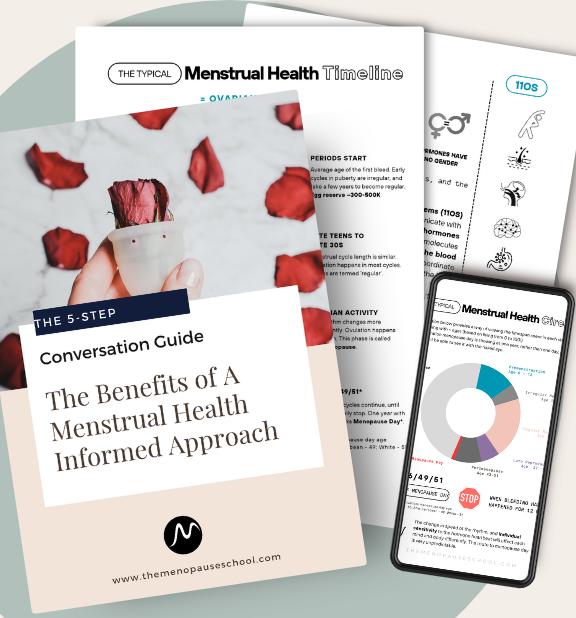
Understanding the hormonal rhythms can give us valuable insight into someone's physical and emotional health, not only in one menstrual cycle, but the entire menstrual health timeline.
Yet much of the education available to wellness professionals misses out menstrual health entirely, and makes no reference to ovarian activity or ageing - and how they may be affecting their clients from head to toe.
Imagine the possibilities for your practice
Whether you work with touch, movement, nutrition or conversation, understanding menstrual cycle biology can bring another dimension to the work you already do.
You begin to ask different questions, explore patterns and consider someone's experiences in the context of where they are on the menstrual health timeline.
You can also help clients develop a greater awareness of their own biology, long before they reach perimenopause.
Let's learn to talk differently about menstrual health
I'd love to see menstrual health education become a standard part of professional development across the wellness industry.
Imagine how much collective knowledge we could share, how many better-quality conversations we could have and how many people we could help understand their bodies.
Menopause awareness has opened the door. Now it's time to open our minds to a bigger picture of menstrual health across life stages.