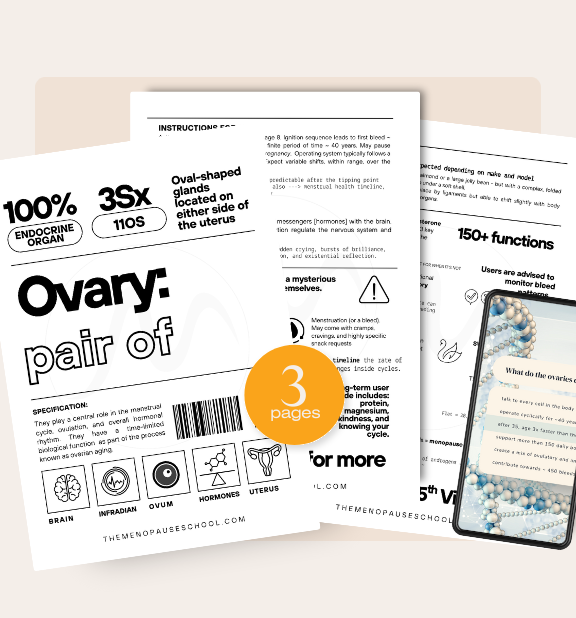
A Menstrual Health Informed approach for Coaches
In this short interview with Menopause Doula graduate Kate Baily, we explore the benefits of becoming menstrual health-informed as a coach.
You don't need to change what you do, just how you do it.
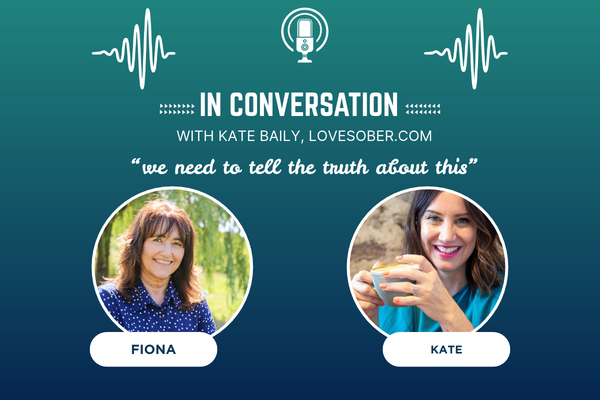
Transcript:
Fiona: Hello and welcome to this 'In Conversation with Kate Baily' today. My name is Fiona Catchpowle, creator and founder of The Menopause School, and we're going to be talking about being menstrual health-informed. So, the bigger picture—not just menopause, but the whole story from periods through perimenopause and beyond. And Kate has a really interesting entry into becoming menstrual health informed. But before we get started, welcome, Kate, and please introduce yourself.
Kate: Hi, hi, Fiona. Hi, everyone. Thank you for having me on. So, yeah, I am an author, speaker, and holistic life coach with the ICF. I specialize in coaching women around sobriety and choosing alcohol-free lives in midlife. I bring together my coaching, menopause support, nervous system literacy, and somatic approaches to help women thrive in midlife and beyond.
Fiona: Absolutely fabulous. I love the work you do, and I love your approach. And you are, of course, a guest speaker as well for us, and featured in the Menopause Doula training with some somatic tools, so I can't forget to mention that. When we first crossed paths, I loved the way that we crossed paths because you had noticed that there was something missing. I feel it was the menstrual health-informed approach, but I'd love you to explain what you realized was missing and how it evolved.
Kate: Yeah, I mean, for a lot of, I think, Gen X women, we've been trying to put together the building blocks of quite a few things over the last decade: menstrual awareness, conversations about perimenopause and menopause, and, similarly, thanks to a lot of the amazing work that you do, the sobriety and alcohol conversation. There's been quite a lot of making it up as we live it, which I would definitely say was part of my story. I hit my perimenopause, my menopause transition, and I'm now post-menopause. I noticed that my clients were getting older with me. Some of my earlier work was sort of “mummy wine time” and around the motherhood transition. Then this became more about perimenopause and menopause transition, because suddenly clients were coming to me and saying, “I've never really considered myself to have a drinking problem, but suddenly it's feeling terrible. I can't tolerate it at all. My mental health is wrecked,” da-da. So, there was a real shift in their 40s. Or they'd been sober for quite a while and say, “I've been trucking along fine, and suddenly I just feel shit”—excuse my French—but, you know, suddenly. Suddenly, as it is, Kate. Let's get that one out there.
So, what I realized was, you know, I trained originally as a coach, which is a very cognitive model. I love it for that; it's got loads of really useful tools. But it's conversational, and I realized there was actually a foundational health piece going on with these women. If I was going to just treat this cognitively, it felt almost like a diservice and another layer of gaslighting to women, when actually it was about the body and the body up, right.
Fiona: Yeah, yeah. So, there was the element—technically, from where I come from, it was kind of the biology that was missing. I had felt that as well in my life, of course. Even as a biologist and a holistic health and wellness practitioner, we are just not taught that.
And so you came and joined the program. I know that we connected really well straight away, and how you then took that biology was beautiful. I love the way that you integrated it, which I'll ask you about in a minute. But when you started to look at this piece that you knew was missing, but didn't quite know exactly what it was, what was the light-bulb moment for you when you started to learn about ovarian health and the biology behind the menstrual health timeline, from the very beginning moving forward?
Kate: The light-bulb moment for me—and I'm almost embarrassed to say it—was that I was one of those women who really enjoyed my menstrual cycle. It felt very uncomplicated; it was very regular. I really liked it. It made me know where I was in terms of organization, so I feel like I was pretty lucky. It didn't really occur to me because weren't having those conversations 10 or 15 years ago, were we? We just weren't. So, it was actually when I started to go through perimenopause and get symptoms that it was a light-bulb moment for me personally, and then professionally when I was seeing it with other women.
And I think one of the big things—I mean, because I was so heavily focused on my niche around alcohol—I think it was understanding the liver's role. Yes, it was putting together the stress, you know, the HPA axis, the HPO axis, and how this was all impacting each other. It's really understanding our biology as a whole, rather than these different organs doing different roles. I started to see, hang on a minute, there's this cultural layer to it where women are really stressed, and then we're taught to drink to get rid of our stress. This will then have an impact on the liver; then the liver can't metabolize or remove the estrogen; then this is going to affect our mental health. It was just like, okay, we need to tell the truth about this, have the language for it, be literate in it, and enable women to talk without shame to health care providers. So, this was the real oomph for me.
Fiona: Yeah, like you say, menstrual health literacy isn't something that we are taught, which is obviously one of my passions—to be out there teaching it. And that's what I loved about it. I remember we'd had conversations about how the process of ovarian aging impacts the whole person, and then your particular niche area with sobriety and the liver, and that conversation we had about it. There's overwhelm coming from all sorts of directions, and then when you have the overwhelm on the inside as well, it's that extra straw that breaks the camel's back.
Kate: You need real care around that rather than faux care,
Fiona: rather than a token gesture. You have to go, this is bigger than us; we need to understand all the individual pieces and how they fit together, and also the predictable unpredictability of how one minute we get them fitted together and the next minute they come apart.
Kate: Yeah, yeah.
Fiona: And then, once you've explored all of that, the conversations we'd had and what we'd done together, how have you integrated it into the work that you already do within your modality? How does your conversation look now with someone, different to how it would have been before?
Kate: Yeah. In my intake session, I include not just coaching questions, but basic information. I always ask them about their age and where they identify as being in terms of the perimenopause transition. Pretty much all my clients—now on my website it says midlife coaching, but the funnel is there. I very rarely get women younger than this, so these are very much the conversations I include. I offer the Menopause School journal if women would like to have that, and I also include what we always contract around: resources. So, there's an educational element to it. Strict coaching is just a conversation; it's very open, you don't lead. I would say there's more of an element of educating and maybe a little bit of mentoring. We talk about it; I have those conversations with them and I can signpost. I love it when women have that kind of information and start putting it together. It can be very powerful in terms of the work I do, because they're like, “Oh, so this isn't actually helping me; alcohol is going to make everything worse.” And then, “Oh, that's how it all comes together.” I would say there's that kind of—we call it psych ed, but it isn't really. It's more biology, psychology, and psych ed.
Fiona: It's kind of biology for grown-ups, and I love that.
I love what you said about how it's a slightly unconventional coaching approach, which is where I always see the doula fits, because there is this element of having to facilitate the learning, as we know we haven't been taught this.
Kate: Yeah, exactly.
Fiona: That's really interesting that you are able to integrate that into your existing modality. I love hearing it.
Kate: Yeah. And so, I always do the three-month package with clients, especially if there's stuff to unpick around this. Some clients just go, “You know what? I'm sorted. I'm on HRT or whatever, and this is what I do,” and they feel well-resourced. So, it's great that we can bring that in and have the conversation about it. But if someone is saying, “Hang on, I went to my doctor, but then they said that you can't have…” and whatever, I would then do an actual menopause doula session within the coaching.
Fiona: Yes.
Kate: Also, explain that three months of data collection—gathering the data, gathering the intel—means they can then spend long enough to go to the health care provider and have this kind of confidence. I would say mainly it's helping with literacy and confidence.
Fiona: self-advocacy.
Kate: Yeah, self-advocacy. A lot of women I work with have a tendency to pathologize themselves. So, anything we can do to name it, tame it, and give them information to arm themselves with—all of that, I feel, is so, so, so important and useful to women.
Fiona: So, my understanding would be, and correct me if I'm wrong here, when it comes to coaching, if you're looking to support someone who's getting, let's just go with brain fog, for example—we mentioned it—that is related to their menstrual health. Until you're able to help them navigate that, it's going to be really difficult for them to focus on the purpose of the coaching.
Kate: Yeah, absolutely. And I guess, in terms of the niche that I do, often they come very specifically with, “I want to stop drinking,” so we have a very clear goal. It's very much about keeping things very, very simple. It's around the science of habit change and resourcing somatically to help people stay calm enough to access their thoughts. Yeah, so you're absolutely right; there could be layers. There are layers there: the stress, the trauma responses, the hormonal side of things. So, it's very much about, okay, let's take this right, right, right down, and almost move through days together, right. And one of the biggest things is, once you've got rid of the alcohol, you can start to get a more regular baseline, yeah, and then work from there.
And then from there. So, that's often the first point with me, because that would be the issue they were coming from. But then it's talking about the hormones and the stress. It always is. Always the hormones.You know, menstrual health and stress and the interplay of that. Always the connection.
Fiona: Amazing. So, I always say, like, I like to put the ovaries at the centre of everything. And it does sound like you do that, but you do it so beautifully that you almost don't even notice. It's because it's the way you've just blended it all together. I could sit and listen all day, but we're going to leave it there, and we'll probably have a part two, part three, or something like that. I really appreciate your time and sharing insight into how you've integrated menstrual health into the work you already do. So, thank you.
Kate: Oh, thanks, Fiona.
END
Whether your modality is based around a physical or talking therapy creating a treatment plan around your clients menstrual cycle health, is transformational.
Coaching clients in their follicular phase and their luteal phase is like two completely different people - which one should be turning up for the appointment?
At The Menopause School we believe being menstrual health-informed is the missing link in how we learn, think and talk about the health and wellbeing of people with ovarian systems. Wellness professionals of all modalities can support clients in better ways, not by changing what they do, but the way they do it.